
4/26
CER-UIC High-Level Freight Meeting in Vilnius
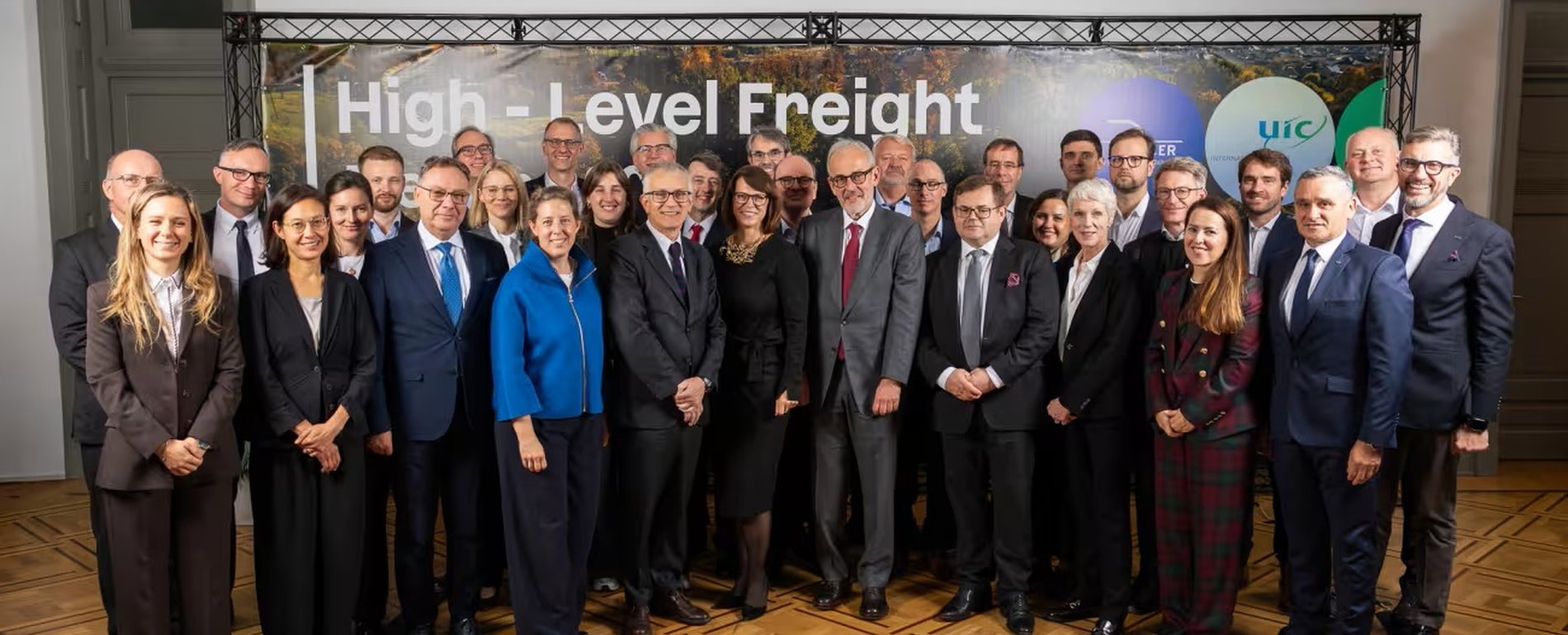
On 15 October 2026, the annual CER-UIC High-Level Freight Meeting was held in Vilnius, the wonderful capital of Lithuania and the place where the revised protocol to COTIF was signed on 3 June 1999. This year’s event was hosted by LTG Cargo and the CIT Secretary-General was invited.
Opening remarks were delivered by CER Executive Director Alberto Mazzola, UIC Freight Director Bertrand Minary, and LTG Cargo CEO Eglė Šimė, setting the scene for discussions on the sector’s strategic contribution to Europe’s competitiveness and resilience. The first panel brought together representatives of the European Parliament, NATO and the rail sector to explore rail freight’s contribution to European preparedness. The discussion highlighted the importance of reliable cross-border connections and investment in infrastructure, terminals and rolling stock to support military mobility while preserving sufficient capacity for commercial freight. Cooperation between civilian and military authorities was also recognised as essential to strengthening Europe’s ability to respond to crises.
The second panel, “What the Market Needs from Rail Freight”, focused on the expectations of industry and logistics partners. Customers require reliable and competitive end-to-end transport services, supported by effective connections between ports, terminals and the rail network. These exchanges reinforced the message that competitiveness depends not simply on the availability of train paths, but on the performance of the entire logistics chain. This important study will be specifically presented during the upcoming CIT Webinar 1/2027 on 28 January 2027.
Building on these perspectives, the panel “Delivering a Competitive European Rail Freight System” brought together senior executives from European rail freight undertakings to consider the practical changes needed to strengthen the sector. A CER-commissioned study on European rail freight competitiveness, presented and discussed with freight CEOs, identified reliability and service quality as major commercial challenges, affected by network disruption, unstable capacity allocation, delayed infrastructure upgrades, and labour constraints. The central message was that existing European frameworks must be implemented more effectively, supported by stronger horizontal coordination between policymakers and the sector, as well as adequate investment in infrastructure, terminals, rolling stock and digitalisation.
The final round-table discussion focused on practical initiatives to improve international rail freight operations through enhanced data exchange, greater interoperability, stronger operational resilience and improved workforce skills. Sector-led solutions and the coordinated deployment of technologies such as the European Rail Traffic Management System (ERTMS) and digital automatic coupling (DAC) were highlighted as important enablers of more efficient services.
Drawing on the discussions, the Vilnius Conclusions call for stronger cross-border capacity planning, stable investment conditions, accelerated deployment of interoperable technologies and greater European preparedness. The meeting reaffirmed that delivering competitive rail freight requires shared responsibility between policymakers and the entire rail ecosystem.
Photo: Based on the CER press release - © LTG Cargo / Fotograf: K. Gerai